OK, this fishing report is going to be a little different from what I normally write about. I’ve been writing articles for more than twenty years now regarding fishing in Puerto Vallarta, focusing on the entire area in and around the Bay of Banderas.
Now, I could throw plenty of facts and data about what’s happening in the fishing grounds, and I’ll get to that. But with the rapid change from La Niña, to El Niño, then back to La Niña conditions in just over a year, you have to understand this has never happened in my lifetime.
So, I will try to describe and explain a bit about what’s happening now. If you don’t know, El Niño conditions are when the water temperatures are warmer than normal years.
La Niña is the opposite and equivalent to El Niño with cold water conditions. About 40% of the time, El Niño conditions will flip the following season to La Niña. Most of the time, we have conditions where currents and water temperatures return for extended periods. That is, until there is another adjustment, where conditions can go either to La Niña or El Niño. In my experience, conditions like this are a pendulum. Warm El Niño will be followed eventually by cold La Niña conditions. It’s all about balance.
But this year we’ve seen La Niña conditions, flip to El Niño, then flip back again to La Niña conditions in the middle of our ‘high season’ for fishing! Now while these conditions are highly unusual at best, there’s more.
Once we hit July, science sites like NOAA declared we were flipping from El Niño ocean conditions to La Niña conditions in the middle of summer!
Usually, when these extreme conditions happen, they’ll happen at the end of the cycle, which is normally before winter fishing conditions or summer conditions. But with a change in the middle of high season for fishing, it decimated the action.
You see, those of us in the Sportfishing industry rely on currents to bring fish into the area. The Billfish, Dorado, and Tuna will ride these currents like a super highway. If you’ve ever been in the surf and found yourself a fair distance from where you entered the water, this is the result of currents. You don’t feel them, but they’re there!
Now imagine that the currents just stopped! That’s exactly what happened. At the beginning of our best fishing season, the currents just stopped dead! And that’s not all.
We normally see several hurricanes during the year. A few years back, we had 26 hurricanes. That’s one a week for the entire Spring and Summer fishing season. Now, they’re generally out hundreds of miles so it doesn’t affect us here in Vallarta. Now, when they’re closer in, that’s another thing. The reason this is important is that hurricanes push fish into the area. It can also push fish out, but mostly they’ll be moving in our direction.
It created a stagnant situation with no hurricanes and no currents to bring fish into the area. Fish weren’t moving in, but they also weren’t moving out. I thought the fishing season was dead. But then Yellowfin Tuna came into the Corbetena and El Banco Area.
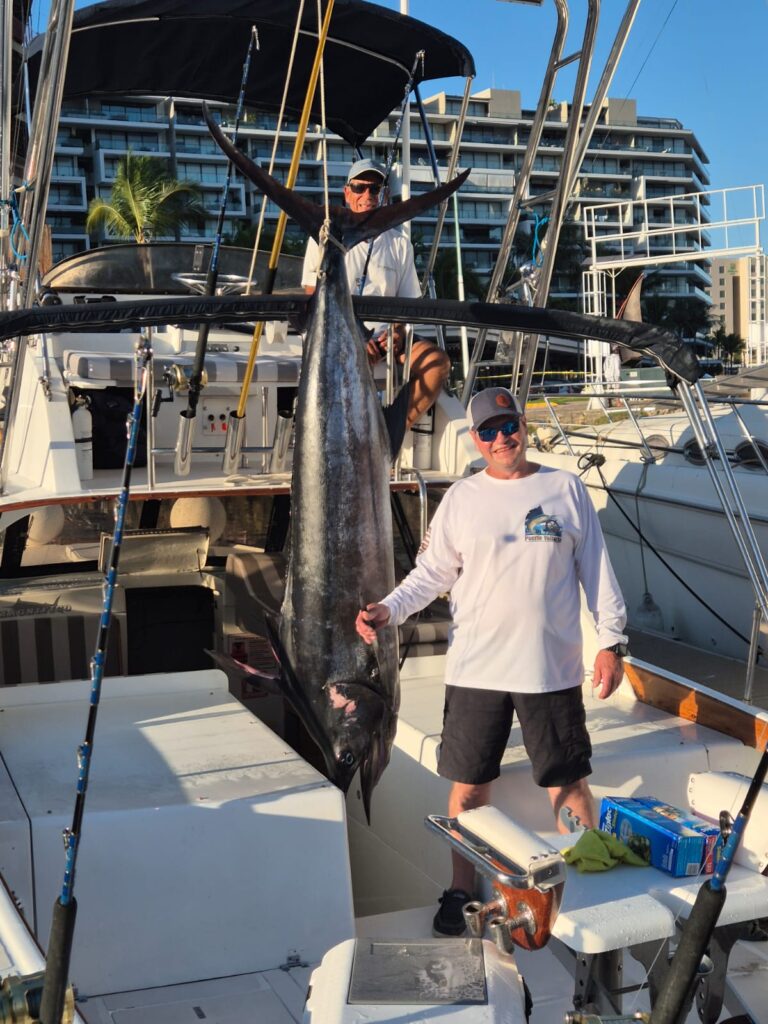
Surprising to say the least. Then the Black Marlin moved in - we haven’t seen any real Black Marlin numbers for a few years now. Fishing had improved!
But then there was the water temperature, it wasn’t cold, but it never got ‘warm.' By this, I mean the water never got warmer than 87 degrees at any of our world-famous fishing areas. In comparison, Corbetena will reach 92 degrees in an El Niño condition! Keeping in mind five degrees in the water is more extreme than you may think for a fish.
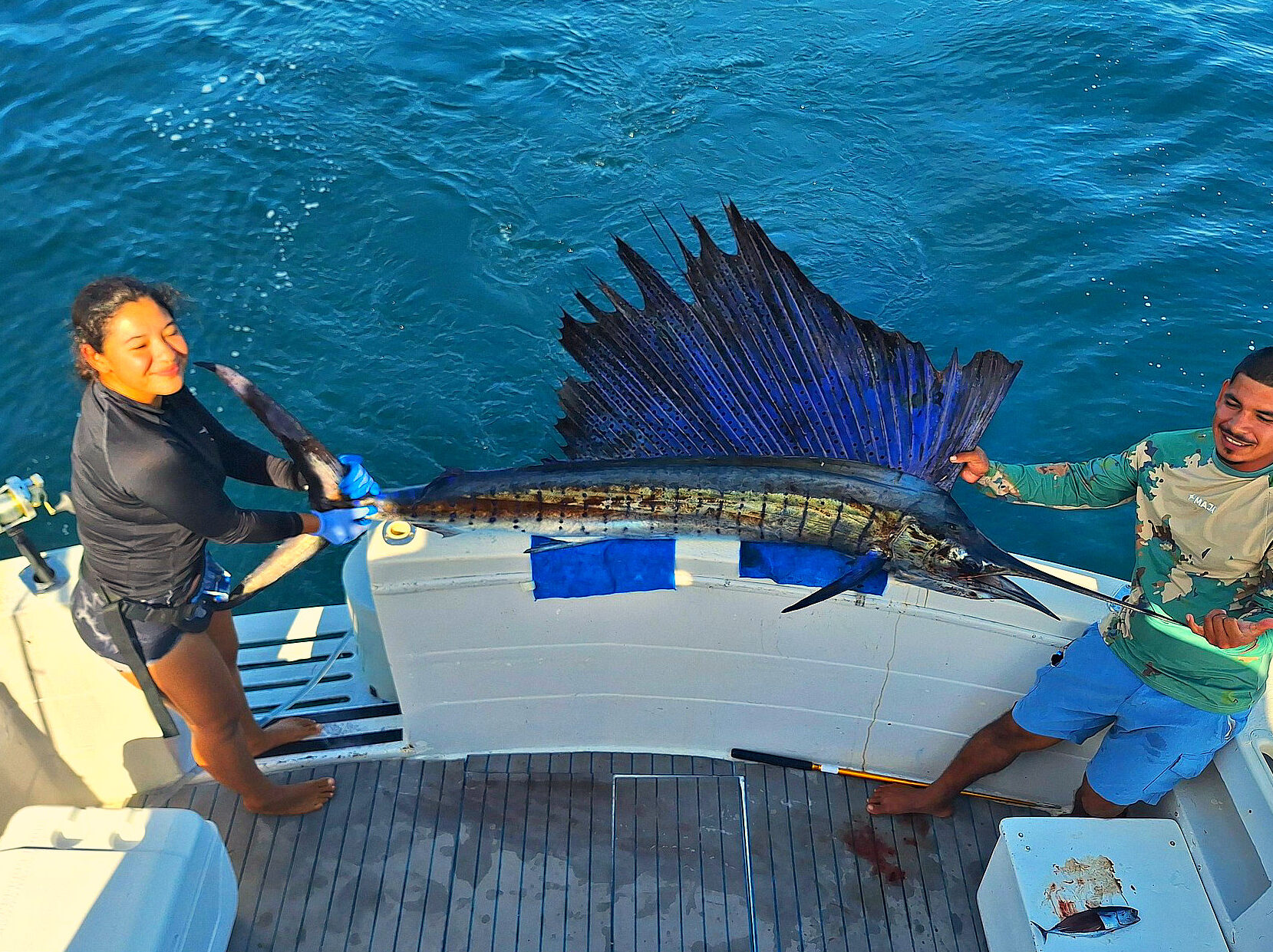
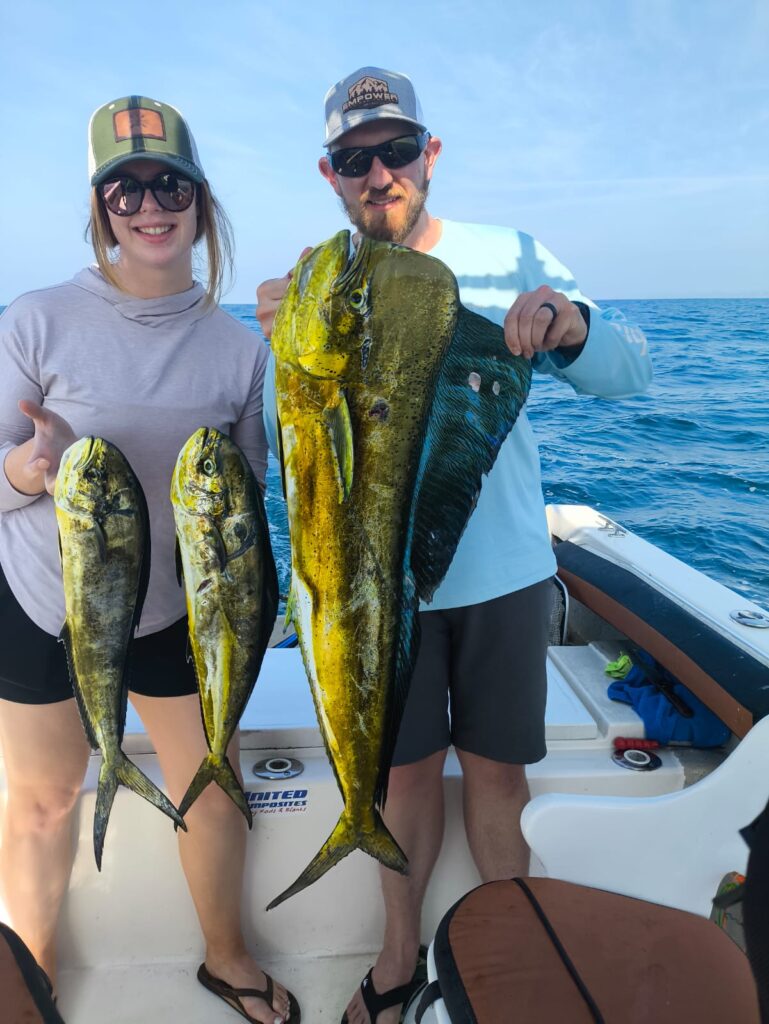
Once we entered October, I knew at that point, the fishing was going to get weird. But then, to my unexpected surprise, Dorado moved in, Sailfish numbers exploded, and shortly after our local Marlin Tournament, the water temperatures started heading south.
Right now, we’re seeing Whales for their annual trek to the Bay of Banderas. Along with the Whales came the winter currents we don’t expect to see until the middle of January. I normally call it the ‘Big Chill.' With clashing currents, the sediment on the bottom of the bay gets stirred up. The results of this is dirty water, the dirty water fish hate and then leave the area.
We’ve just gone through two weeks of this. So ,we’re in an accelerated schedule where conditions we are experiencing now are a month early. Conditions were so bad last week that I didn’t even write an article, it was that depressing. But like always, things can change quickly and they’re changing now.
The dirty water is filtering out as the ‘green clean’ water that is even colder is moving into some areas. This is another indicator that the cold water isn’t going anywhere in the near future.
After all that, the fishing is better than you’d expect. Those having the best luck are taking a heading of 330 off the point of Punta Mita, aka Punta Nayarit. Once you’re out about ten miles, the water turns blue, and you’ll find Sailfish, smaller Blue Marlin, possibly Dorado and Football Yellowfin Tuna running with the Spinner Dolphin. This will be a ten-hour trip and frankly, a twelve-hour trip comes with the opportunity to hit the afternoon bite. Which has been better than the morning bite! This is your best bang for your fishing dollar right now.
I hear the water is cleaning up in many areas, but it could be the cold, clean green water. This is normal for December as the Krill Squid moves in, aka Whale food. Every species around them will just put the feed bag on and chow down!
Many times what’s out there species-wise is so full of Krill, they won’t take bait. That’s the everyday challenge of December! So, as you can assume, the fishing in the bay, out of the bay, all the way to about six miles before you come to the rock at Corbetena wasn’t happening.
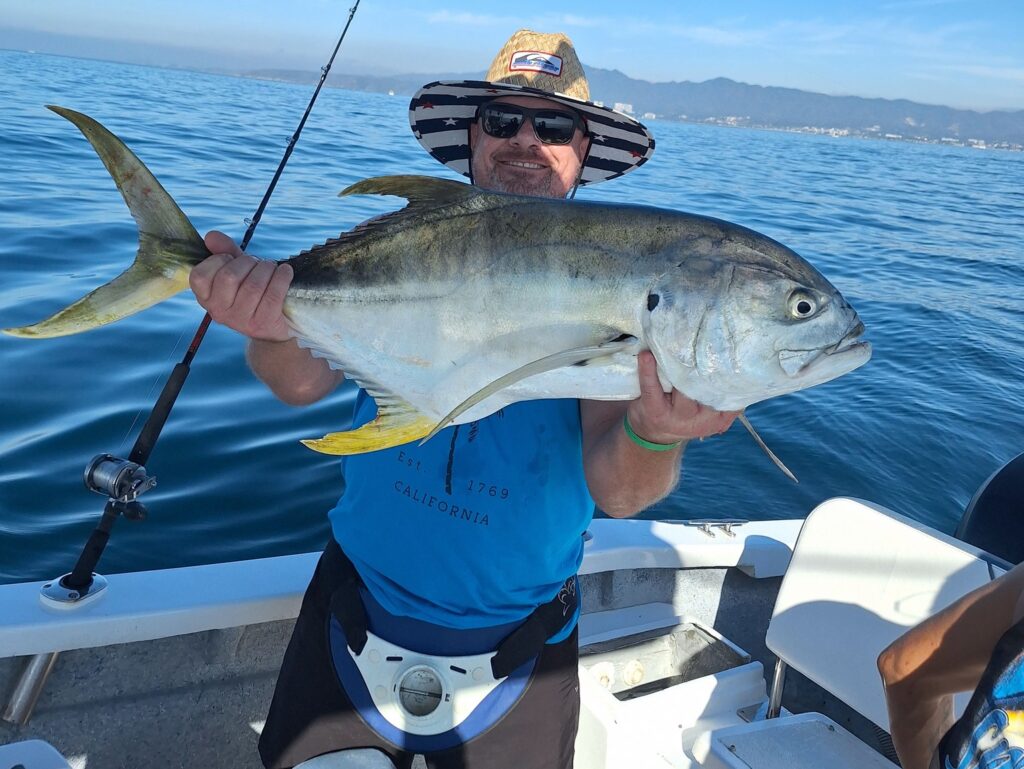
The bay is now getting better. The south end of the bay has Jack Crevalles and possibly Dorado. It's surprising but true. Sierra Mackerels don’t care what color the water is, and, for now, that’s pretty much the fishing report.
Don’t be disappointed; the fishing is improving, and the winter species will soon be moving in.
Again, for now, your best bang for your fishing dollar is a ten-hour trip, with no guarantees.
Right now the water temperatures are a chilly 78 degrees. But, with the massive amounts of bait in the bay and around the area, species like Yellowfin Tuna and some Dorado are hanging around.
I am now looking forward to our February Dorados, which come down from the northern fishing areas, headed to the warmer southern waters. The bite has been between 09:00 to about 11:00. The fishing mid-day can be sporadic, but the afternoon bite, starting about 3 pm, is stronger than the morning bite. A longer day, ten hours, will allow you to maximize your ‘luck.'
For now, it’s hit or miss; this is normal for this time of the year. Those with a positive attitude and a few pesos can still get Blue Marlin, Tuna, and more if you have the time and the desire.
I got a little detailed here, but I thought I’d share some insights, especially since I didn’t post a report last week. Except for the dirty water periods, the fishing in Puerto Vallarta always has options.
Remember, jigging is a great option, dirty water or not. But it looks like we’ll be entering a premature winter fishing season. I’m looking forward to the Sea Bass, Snappers, Grouper, and more in the coming weeks. The good news is, you can have a great day on the water and not have to leave the bay. Thanks for reading and…..
Until next week, don’t forget to kiss your fish!