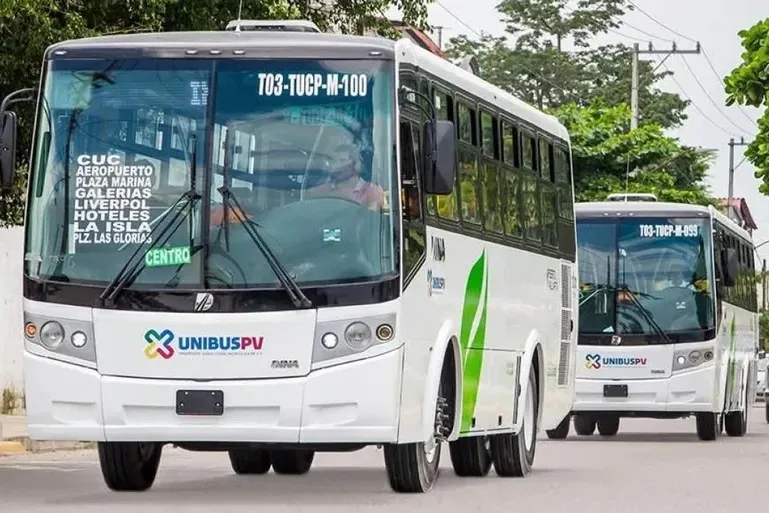
Puerto Vallarta’s new electric bus system has officially entered its paid service phase after a weekend of free rides introduced residents and visitors to the city’s newest public transportation option. The launch marks another step in Jalisco’s effort to modernize public transit while reducing emissions, improving accessibility, and offering a more comfortable riding experience.
The initial fleet operates primarily along Avenida Francisco Medina Ascencio, one of Puerto Vallarta’s busiest transportation corridors. The route connects Ixtapa, the University Center of the Coast (CUCosta), Lic. Gustavo Díaz Ordaz International Airport, Marina Vallarta, the Hotel Zone, and other high-demand destinations. Officials say the corridor was selected because it serves thousands of workers, students, residents, and tourists each day.
After the introductory free weekend, passengers began paying the regular fare. Earlier this year, Jalisco approved a technical urban transit fare of 14 pesos, but state officials announced they would continue subsidizing fares so riders pay 11 pesos instead of the full amount. Eligible riders, including students, continue to receive discounted fares through the state's transit program.
The buses represent a significant upgrade over many of the diesel vehicles they replace. Riders will find air conditioning, low-floor boarding, wheelchair accessibility, USB charging ports, onboard security cameras, and digital passenger information displays. The fully electric drivetrains also make the buses considerably quieter while eliminating tailpipe emissions.
Puerto Vallarta is only the second city in Jalisco, after Guadalajara, to deploy a fleet of fully electric public buses. The electromobility initiative is part of the state's broader strategy to modernize public transportation.
In late July, additional articulated electric buses arrived in Puerto Vallarta ahead of future service expansion. Articulated buses can accommodate approximately 130 passengers and are expected to increase capacity along the city's busiest transit corridor.
Beyond passenger comfort, the project is expected to reduce greenhouse gas emissions, improve local air quality, and lower noise levels in one of Puerto Vallarta's busiest tourism and commercial districts. Electric buses also require less routine maintenance than diesel-powered vehicles, potentially reducing long-term operating costs.
For visitors, the new buses provide another convenient transportation option between the airport, Marina Vallarta, hotel districts, and other popular destinations. For residents, they offer a quieter, cleaner commute while demonstrating the city's commitment to sustainable transportation.
Officials have indicated that this is only the first phase of Puerto Vallarta's electric transit system. Future expansion could bring additional vehicles and routes as the city continues investing in cleaner public transportation infrastructure.